Elementary
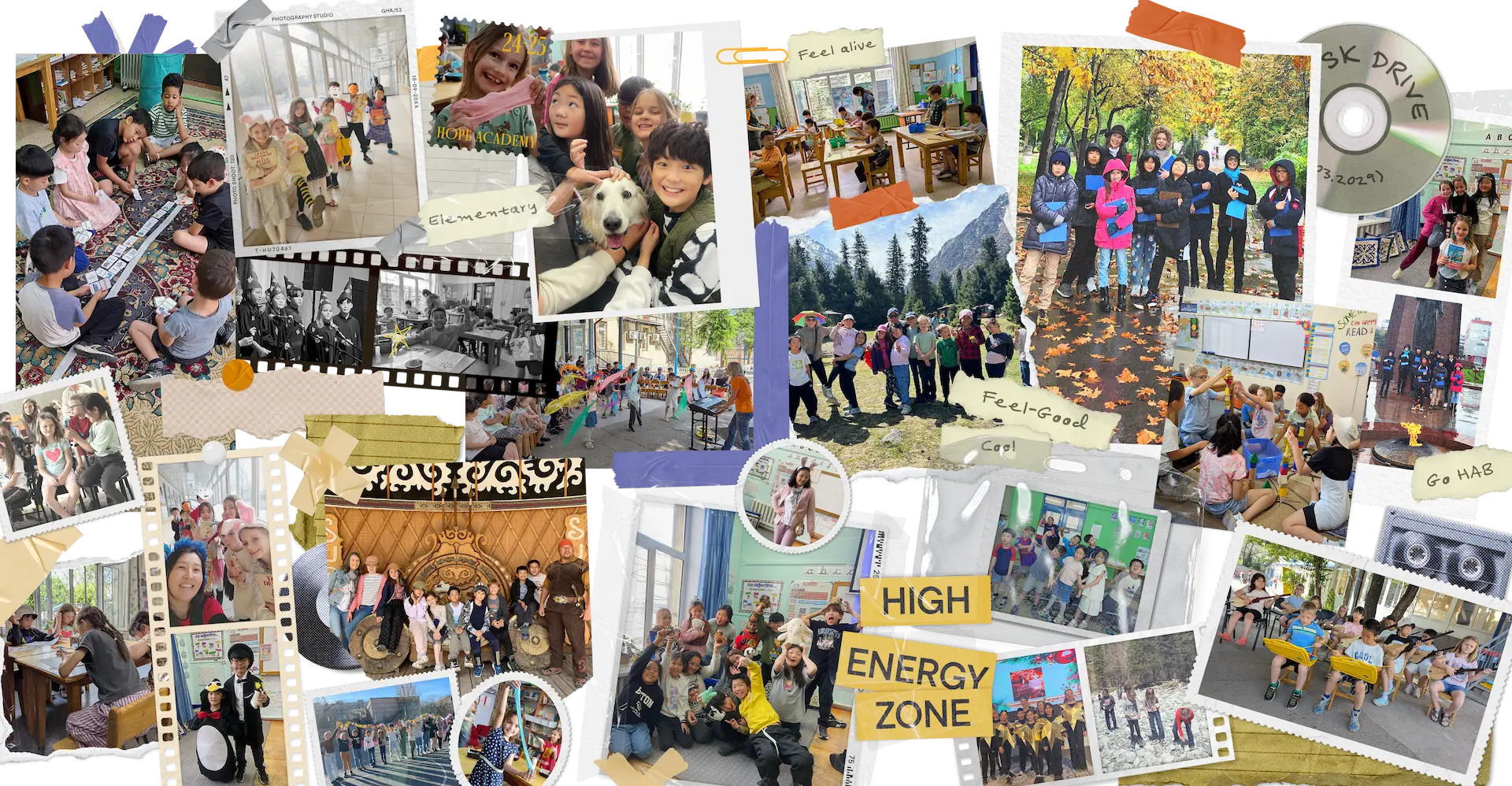
Welcome to the Hope Academy Elementary School!
Elementary children, kindergarten through Grade 5, develop foundational abilities in communication and problem-solving skills to support lifelong learning. Students in the Elementary School generally have the same instructor and are in the same room for all core subjects. Core subject areas include language arts (reading, writing, speaking, and listening), math, social studies, science, and ethics. Enrichment lessons in music, art, foreign language, computers and physical education are also part of school life.

Jyldyz Jumaeva
Elementary Principal
Kindergarten, Grades 1-2
Lower Elementary
Building Literacy Foundations
In the lower elementary, the children learn to recognize letters and say the sounds they make, as well as read and write words. They also learn to break texts into meaningful parts and to identify the main idea, the plot, the setting, and the main characters. The students become familiar with the grammar of the English language and learn to apply it in spoken and written speech, including the use of parts of speech and verb tenses.
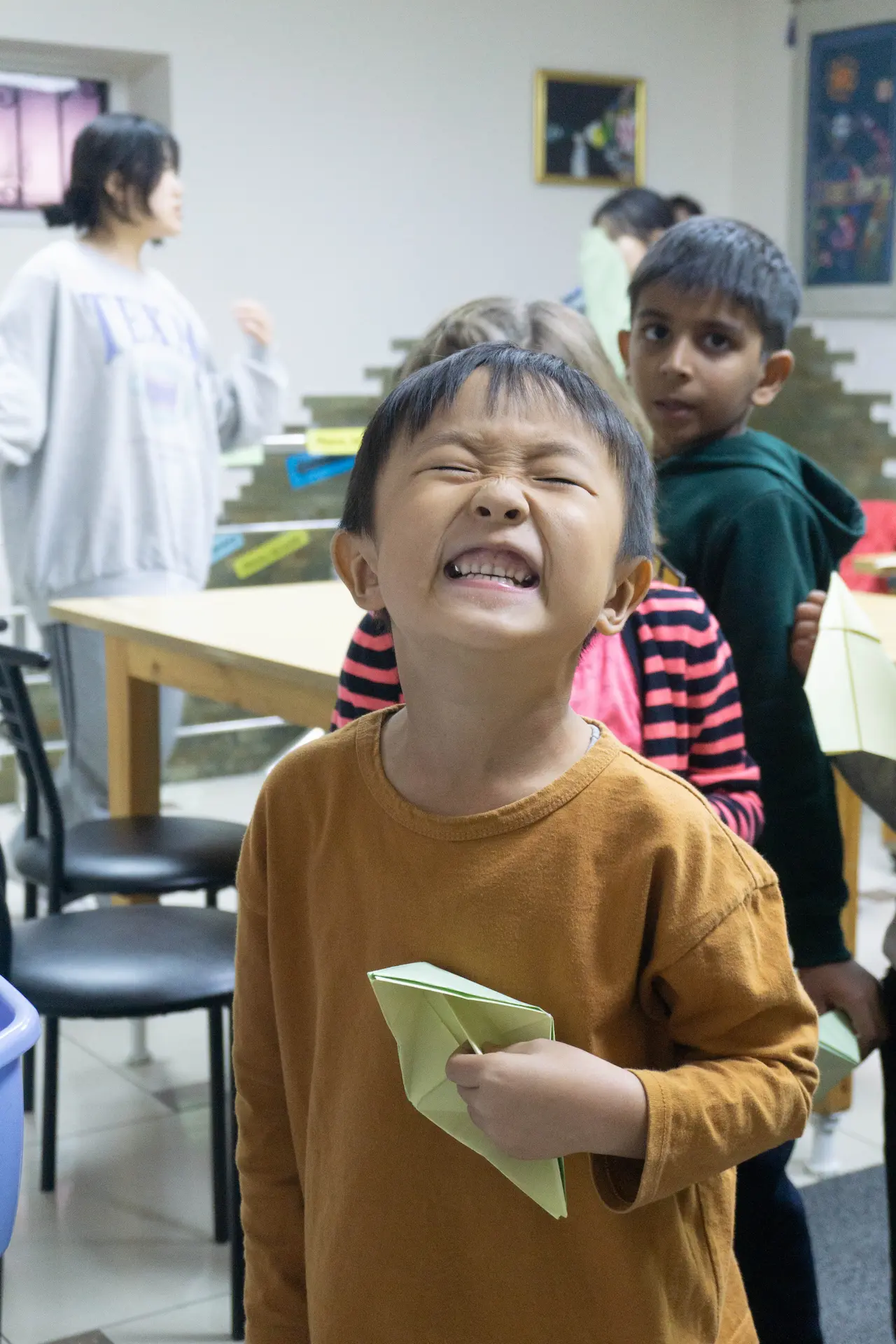
Early Math Skills and Number Sense
As part of their Math curriculum, students learn to count, sequence numbers, add, and subtract; they also begin studying time, money, different shapes, and graphs. In Grades 1-2 students learn to solve more complex examples of addition and subtraction in mathematics lessons and learn about multiplication and division. They must be able to read numbers within 1000, use mathematical terminology, and also recognize and compare simple fractions.
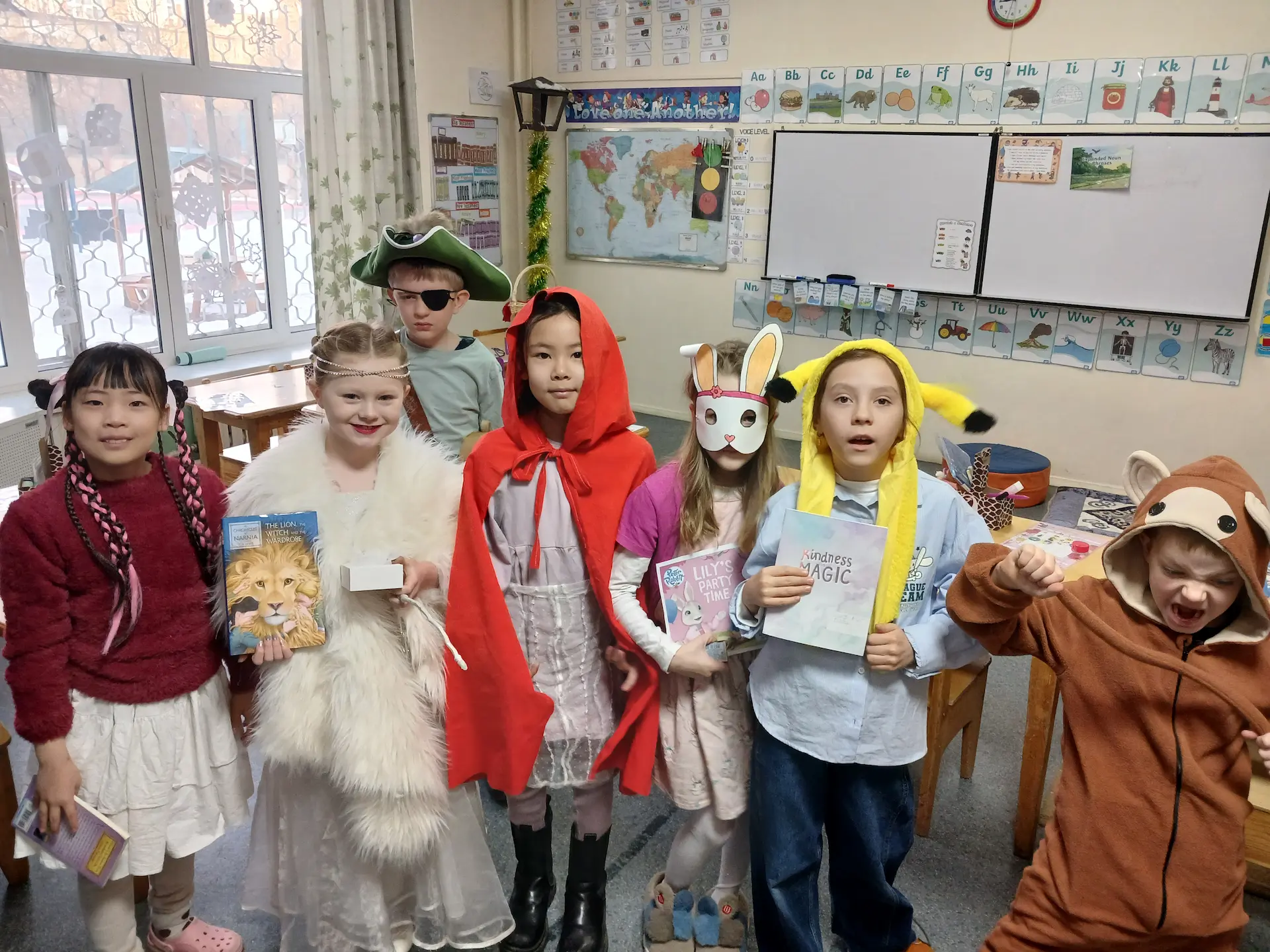
Grades 3-5
Upper Elementary
Strengthening Reading and Writing
In Grades 3-5, students are increasing reading fluency, developing comprehension skills, and expanding vocabulary through group and individual reading of both fiction and nonfiction texts. Students learn and practice the formation of joined writing. Emphasis is placed on using correct grammar and punctuation in writing. The students continue to develop the ability to clearly express their thoughts by writing in various forms, revising their writing, and applying knowledge of grammar.
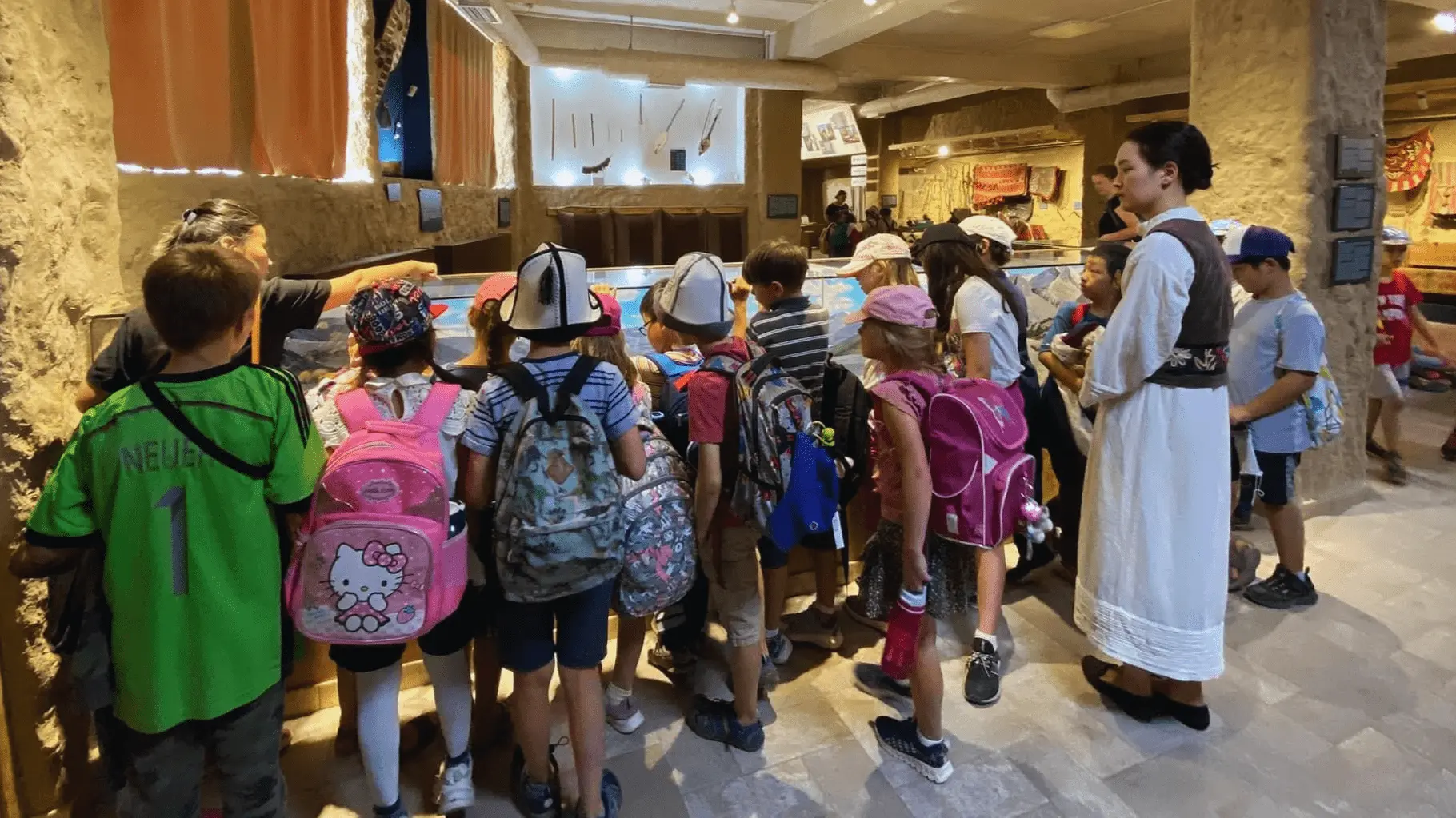
Developing Advanced Mathematical Thinking
Mathematics instruction is based on a comprehensive program tailored to students’ developmental levels. The students develop calculation skills, work with units of measure, and learn to process data. Skills include sequencing; developing calculation skills of addition and subtraction, mental and written multiplication, and division; performing mathematical operations with fractions, decimals, and percentages; describing the properties of two-dimensional and three-dimensional geometric figures; and working with concepts of area, time, length, weight, and volume.